
Coal-fired power plants need to control sulfur dioxide, acid gases, particulate carryover and visible plume without creating an unmanageable water, wastewater or fan-load problem. By the end, you will be able to match each scrubber configuration to its pollutant, compare wet and dry control options, and prepare a procurement specification for Indian operating conditions.
Key takeaways
- Wet FGD controls SO₂ using limestone or lime slurry and produces gypsum.
- Match scrubber materials and water systems to India’s coal, climate and water quality.
- Require limestone preparation, oxidation, mist elimination and corrosion protection in the design.
- Compare guarantees for SO₂ removal, pressure drop, power use and wastewater quality.
What Wet Scrubbers Control in a Coal-Fired Power Plant
A wet scrubber in a coal-fired power plant primarily controls sulfur dioxide (SO₂). In wet flue-gas desulphurization, limestone or lime slurry absorbs SO₂; the resulting calcium sulfite is normally oxidized into gypsum. This gives wet scrubbers high SO₂-removal capability, including under changing coal sulfur content.
| Equipment or configuration | Main pollutants controlled | What it does not replace |
|---|---|---|
| WFGD absorber | SO₂; some HCl, HF and oxidized mercury | Dedicated mercury, NOₓ and particulate controls |
| Wet particulate scrubber | Fly ash, fine particles and some acid mist | High-efficiency ESP or baghouse without validated performance |
| Mist eliminator and plume controls | Droplets, visible mist and opacity caused by carryover | SO₂ absorption or combustion controls |
| SCR or SNCR | Nitrogen oxides (NOₓ) | SO₂, fly ash, CO and CO₂ controls |
Wet scrubber benefits power plants India’s coal fleet needs include acid-gas reduction and, with suitable mist removal, lower visible plume intensity.
However, an absorber is not a general power plant gas control system: it does not replace an electrostatic precipitator or bag filter for fly ash, SCR or SNCR for NOₓ, oxidation equipment for carbon monoxide, or carbon-capture equipment for CO₂.
Treat HCl, HF and mercury co-removal as site-dependent, not automatic compliance. Mercury speciation, coal chemistry and upstream particulate capture affect performance. Include absorber evaporation, mist losses and controlled blowdown in the water balance; chloride buildup otherwise causes corrosion, scaling and poorer gypsum quality.
Wet Scrubbers Versus Dry, Fabric and Electrostatic Control Systems
Searches for wet scrubber benefits power plants india should end with a load-and-water assessment, not a technology slogan. Wet flue-gas desulphurization (WFGD) is the stronger choice for large coal units, high or variable sulfur coal, and projects requiring consistently high SO₂ removal. Limestone or lime slurry absorbs SO₂, while oxidation produces gypsum.
| Option | Better choice when | Main limitation |
|---|---|---|
| Wet FGD | High sulfur load, strict SO₂ limits, large boilers, and a gypsum or waste outlet exist | Water use, wastewater, corrosion, and higher auxiliary power |
| Dry sorbent injection | Water is scarce, retrofit space is tight, and moderate SO₂ reduction is acceptable | Higher reagent use and lower removal at heavy sulfur loading |
| Spray-dry absorption | You need less water than WFGD but stronger control than injection | Produces dry waste and needs reliable atomization |
| Baghouse | Fine particulate control and stable capture are the priority | It does not replace SO₂ control |
| Electrostatic precipitator | High gas volume and low particulate resistance suit the plant | Performance suffers with difficult ash or changing coal |
| Hybrid plant | You need ESP or baghouse particulate control alongside wet FGD | More equipment, controls, outage work, and maintenance |
A baghouse or ESP remains upstream of WFGD; the absorber does not replace it. Choose wet FGD only after counting absorber evaporation, mist losses, gypsum dewatering, blowdown, limestone preparation, and wash water. Limited water or zero-liquid discharge requires engineered blowdown treatment, not a paper water-saving claim.
How Indian Site Conditions Change the Scrubber Design
A scrubber sized on boiler nameplate flow alone can miss its removal target. Define actual and design-case gas flow in Nm³/h, oxygen and moisture content, inlet temperature, pressure, turndown, and coal sulfur load at minimum and maximum generation. Temperature determines absorber materials, evaporation, fan duty and reheater requirements.
Fix these inputs before comparing packages:
- Coal: sulfur, ash, chlorine, fluorine, mercury speciation and heating value from representative analyses.
- Reagent: limestone purity, particle size, magnesium content, or lime availability; these determine slurry concentration, milling and consumption.
- Water: source flow, temperature, suspended solids, hardness, chlorides and reuse quality. Count absorber evaporation, mist-eliminator losses, gypsum dewatering, blowdown, limestone preparation and wash water—not only spray flow.
- Site: elevation, ambient temperature, corrosion exposure, available footprint, stack arrangement, outage window and disposal or gypsum-offtake route.
- Compliance: unit commissioning date, consent conditions and the applicable Environment (Protection) Rules notification. Verify the limits for units commissioned before 31 December 2003, from 1 January 2004 to 31 December 2016, and from 1 January 2017 onward.
| Input | Design consequence | Ask the supplier to guarantee |
|---|---|---|
| High sulfur or variable coal | Larger absorber, oxidation and reagent capacity | Inlet/outlet SO₂ and removal efficiency at defined loads |
| High chloride water or coal | Corrosion allowance and controlled blowdown | Chloride limit, materials and blowdown rate |
| Limited water supply | Reconsider wet FGD or maximise recycle | Water consumption and wastewater volume |
These inputs reveal the India wet scrubber benefits power plants can obtain—high SO₂ removal and coal flexibility—against water demand and liquid waste. If a supplier cannot state test conditions, its guarantee is not comparable.
The Operating Systems Behind Reliable Wet FGD Performance
Stable SO₂ removal comes from keeping slurry chemistry, gas contact and residence time within design limits, not from setting one absorber pH. A properly designed wet FGD system can achieve roughly 90–99% removal, but the figure is meaningful only against the inlet sulfur load, gas flow, temperature and reagent quality.
Keep these operating systems under automatic control:
- Limestone preparation and feed control, including slurry density and reagent reactivity.
- Recirculation pumps and spray headers, with standby capacity and even nozzle coverage.
- Forced-oxidation air, which converts calcium sulfite into gypsum and prevents unstable slurry chemistry.
- Controlled blowdown, which limits chloride and dissolved-solids buildup, corrosion, scaling and poor gypsum quality.
- Mist eliminators and wash-water systems, which prevent droplet carryover and visible plume formation.
- Inlet and outlet dampers, expansion joints and bypass seals, which stop untreated gas leakage around the absorber.
Use continuous inlet and outlet SO₂ measurement to verify actual removal rather than relying on reagent feed alone. Absorber pH feedback must adjust limestone addition before low alkalinity causes an SO₂ breakthrough; excessive pH wastes reagent and can damage gypsum quality.
Trend gas temperature and absorber pressure drop. Rising pressure drop points to fouled mist eliminators or deposits, while falling pressure drop can indicate damaged internals or gas maldistribution. Power plant gas control also requires planned nozzle inspections, pump performance checks and blowdown testing after commissioning, because scaling or worn components can quietly reduce contact efficiency.
What to Require from an Indian Wet Scrubber Manufacturer
Make performance guarantees contractual acceptance criteria, not figures in a sales brochure. Define coal sulfur, flue-gas flow, inlet temperature, oxygen, load range, reagent quality and operating hours before comparing wet scrubber manufacturers india.
- Guarantee inlet and outlet SO₂, removal efficiency, pressure drop, water consumption, limestone consumption, chloride concentration, blowdown rate, gypsum quality, noise, start-up time and annual availability.
- Require pollutant-specific guarantees for particulate matter, HCl, HF or mercury; co-removal claims are not equivalent to a mercury-compliance guarantee.
- Tie each guarantee to an agreed test method, sampling location, averaging period and permitted instrument uncertainty.
| Procurement item | Require from the supplier | Failure consequence |
|---|---|---|
| Design basis | Heat and material balance, equipment list, P&IDs, water balance and corrosion-material schedule | Hidden water demand or unsuitable metallurgy |
| Compliance evidence | Performance-test procedure, commissioning protocol and signed acceptance limits | Dispute over whether the plant passed |
| Lifecycle support | O&M manuals, operator training, critical spares, remote support and response times | Long outages after handover |
| Commercial protection | Warranty duration, defect remedy, liquidated damages and availability formula | No practical remedy for underperformance |
Check the applicable Central Pollution Control Board requirement against the unit’s commissioning date and consent conditions; do not apply one SO₂ limit to every Indian unit. The water balance must include evaporation, mist-eliminator loss, gypsum dewatering, limestone preparation, wash water and blowdown.
If evaluating Envipro Engineering Pvt. Ltd-Wet Scrubber System, Bag Filter System Manufacturers, ask for chloride design limits and metallurgy in writing. Those details distinguish a durable absorber from a low-priced installation. These checks expose the real wet scrubber benefits power plants india can obtain without confusing capability with compliance.
Related products
 | Wet Scrubber Systems Manufacturers Wet Scrubber Systems Manufacturers In India Envipro Engineering Pvt Ltd is the Best Wet Scrubber System Supplier, Exporters, Manufacturers in India. View product → |
| Wet Scrubber Manufacturers Envipro Engineering manufactures advanced Wet Scrubber System designed to remove particulate matter, gases, and fumes from industrial exhaust... View product → |
Frequently asked questions
What does a wet scrubber control in a coal-fired power plant?
Wet FGD primarily removes sulfur dioxide (SO₂) from flue gas. Limestone or lime slurry absorbs SO₂, and forced oxidation converts calcium sulfite into gypsum. The system also captures some acid gases and particulate matter, depending on its configuration.
How does wet FGD compare with dry scrubbers, bag filters and electrostatic precipitators?
Wet FGD provides strong SO₂ control but requires slurry handling, water, pumps, corrosion-resistant materials and wastewater management. Bag filters and electrostatic precipitators primarily remove particulate matter, while dry scrubbers use less water but need suitable sorbent handling and produce dry residues.
Which Indian site conditions affect wet scrubber design?
Coal sulfur content, ash chemistry, limestone quality, water availability, monsoon conditions, ambient temperature, plant load changes and local wastewater limits affect equipment selection. Check these inputs before sizing absorbers, pumps, oxidation air systems and mist eliminators.
What should you require from an Indian wet scrubber manufacturer?
Require documented guarantees for SO₂ removal, outlet particulate matter, pressure drop, power consumption, slurry density, gypsum quality and wastewater performance. Also request material specifications, corrosion allowances, control logic, commissioning support, spare-parts lists and performance-test procedures.
Related products
 | Flue Gas Desulphurization System Manufacturers Flue Gas Desulphurization System Manufacturers Envipro Engineering specializes in Flue Gas Desulphurization System Manufacturers (FGD) Systems for power plants and industrial boilers. View product → |
| Flue Gas Desulphurization Systems Flue Gas Desulphurization Systems Envipro Engineering Pvt Ltd specializes in Flue Gas Desulphurization System Manufacturers (FGD) Systems for power plants and industrial boilers. View product → |
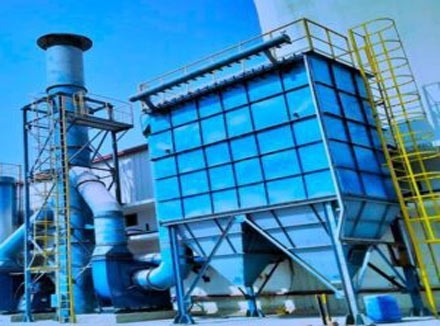 | Gas Cleaning Plants – Multi Pollutants Gas Cleaning Plants – Multi Pollutants Envipro Engineering Pvt Ltd is one of the Best Gas Cleaning Plants – Multi pollutants Manufacturers in India. View product → |
 | Fugitive Emission Control Systems Fugitive Emission Control Systems Envipro Engineering Pvt Ltd is one of the trusted Fugitive Emission Control Systems Manufacturers in India. View product → |