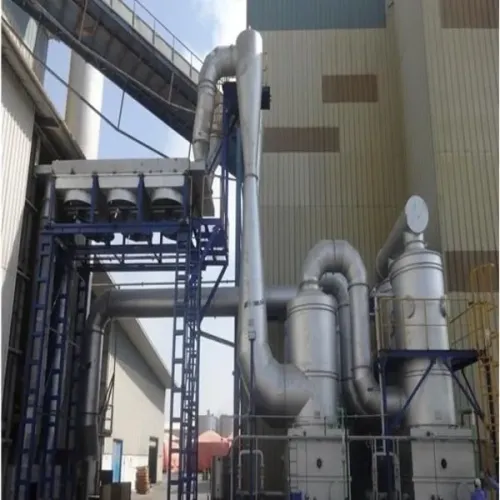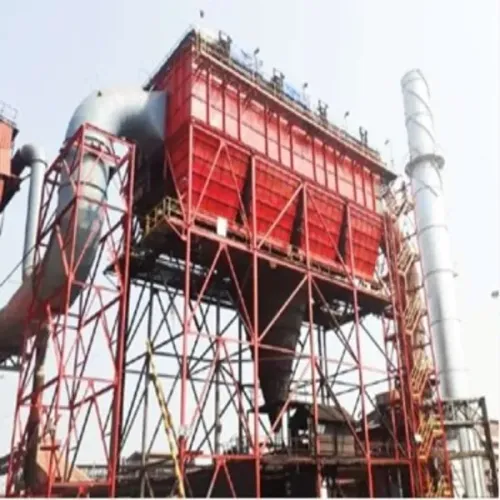

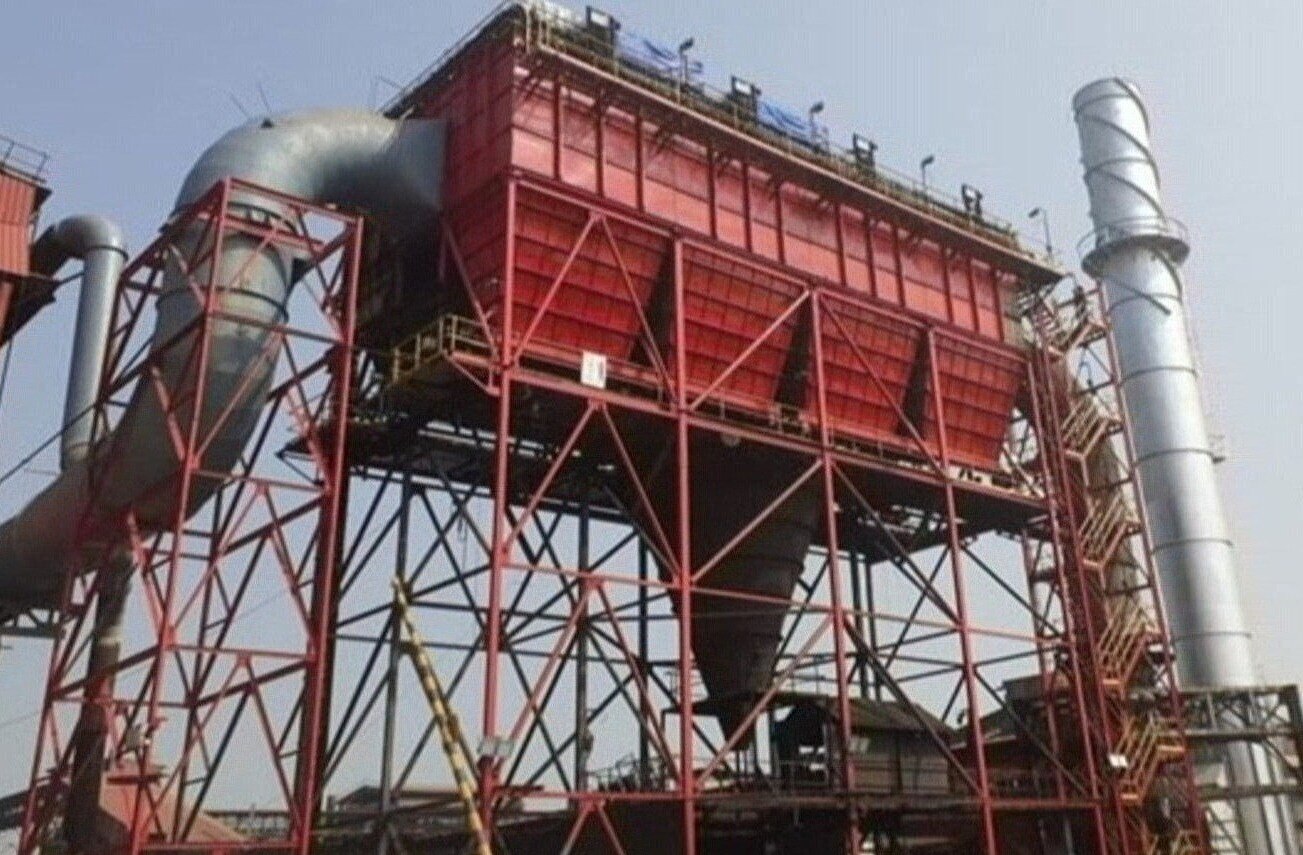
Boiler dust control begins before the baghouse: fuel, flue-gas temperature, ash chemistry and spark risk determine how the system must be arranged. By the end, you will be able to trace the dust path, question a sizing proposal, identify suitable bag media and recognise the operating practices that protect emissions performance.
Key takeaways
- Start dust control at the furnace outlet, not the stack.
- Match baghouse design to coal, biomass or rice-husk ash.
- Calculate air-to-cloth ratio from measured gas flow and temperature.
- Prevent condensation by keeping gas above its acid dew point.
How boiler dust travels from the furnace to the stack
Boiler dust control begins at the furnace outlet, not at the stack. Industrial pulse jet filtration removes particulate matter; it does not remove NOx, SOx, acid gases or mercury, which require separate controls.
1. Hot flue gas leaves the furnace and enters an expansion or dropout chamber. A cyclone or spark arrestor removes coarse ash, sparks and glowing char before they reach the bags. Inlet baffles reduce direct impact on the filter media and distribute gas evenly.
2. Insulated, leak-tight ductwork carries the gas to the baghouse. Insulation and sealed access doors limit air entry and condensation. Inside each compartment, gas passes through bags supported below or above tube sheets; dust collects on the fabric while cleaned gas moves toward the induced-draft fan and then the stack.
3. The hopper is an active discharge point, not a storage bin. Ash must leave through a rotary airlock, double-dump valve or screw conveyor. Accumulation can cover lower bags, cause re-entrainment, obstruct pulse cleaning and send dust back into the gas stream.
4. Compartment isolation lets you inspect or repair one section without exposing the entire system. Use leak-tight seals, differential-pressure measurement and triboelectric or equivalent bag-leak monitoring to identify bypass or ruptured bags early.
Check hopper discharge, compressed-air cleaning and fan operation together; a high pressure drop or visible stack dust often begins with ash evacuation failure.
Why coal, biomass and rice-husk ash change the baghouse design
A coal boiler can send a broad, shifting particle-size distribution to the baghouse; cement, steel and food-processing dust is usually more uniform because its process and feedstock vary less. That difference changes air-to-cloth ratio, pressure drop, bag wear and pulse-cleaning frequency.
| Fuel and dust | What changes | Baghouse consequence |
|---|---|---|
| Coal fly ash | Fine mineral ash, abrasive particles and unburned carbon | Higher wear, variable resistance and possible smouldering |
| Biomass or wood ash | Lower density, alkali-rich and sometimes sticky ash | Deposits blind bags and demand moisture control |
| Rice-husk ash | Very fine, silica-rich particles with high surface area | Rapid cake build-up and higher cleaning demand |
| Multi-fuel ash | Particle size, carbon and chemistry change with each fuel | Design for the worst loading, not the average |
| Cement, steel or food dust | More consistent mineral, metallic or organic dust | More predictable loading and cleaning |
Wet fuel raises flue-gas moisture and lowers combustion quality, increasing unburned carbon, sticky deposits and pressure drop. Alkali salts can become hygroscopic; soot blowing can dislodge an abrupt ash surge, briefly overload the inlet and increase pulse frequency.
A baghouse is not automatically a spark arrestor. Glowing char, sparks and carbon monoxide require a documented hazard assessment before selecting protection.
- Consider a dropout chamber, cyclone or inlet baffle when coarse ash or sparks can reach the bags.
- Assess spark detection, extinguishing, temperature monitoring, explosion relief and isolation devices for high-carbon, biomass or unstable combustion.
- Specify hopper discharge and cleaning controls that prevent re-entrainment after soot blowing.
The design basis should be stated by a pulse jet bag filter manufacturer, using fuel changes and upset conditions rather than one laboratory ash sample.
How to size a pulse jet baghouse from operating data
Use measured gas, not boiler nameplate capacity, to size an industrial pulse jet filtration system. Record flue-gas flow at actual temperature and pressure, moisture, oxygen, fuel type, ash loading, particle size and shape, boiler load range, and required outlet concentration. Standard-condition flow alone understates hot-gas volume and can produce an undersized baghouse.
- Convert the measured operating flow to the design flow, including maximum boiler load, excess-air variation, leakage and soot-blowing conditions.
- Select the air-to-cloth ratio, or filtration velocity, from ash behaviour. Fine, sticky, abrasive, hygroscopic or high-carbon ash needs a more conservative value.
- Calculate cloth area from design flow divided by filtration velocity, then provide compartments that permit online isolation and maintenance.
- Size the hoppers for peak ash generation and specify sealed rotary airlocks or screw conveyors; open or blocked discharge causes re-entrainment and covers bags.
- Check total pressure drop against induced-draft fan capacity, motor power and available boiler draft.
| Design choice | Result | Use |
|---|---|---|
| Lower filtration velocity | More cloth, larger casing, lower pressure drop and cleaning stress | Difficult or variable ash |
| Higher filtration velocity | Smaller equipment, higher resistance and pulse frequency | Stable, readily filterable ash |
A pulse jet bag filter manufacturer for boiler dust control in India should state the applicable Indian boiler particulate standard, fuel category, capacity, averaging basis, stack-test method and operating load—not a generic emission limit. Ask Envipro Engineering Pvt. Ltd-Wet Scrubber System, Bag Filter System Manufacturers for that auditable design basis.
A pulse jet bag filter manufacturer should also document every test assumption.
How temperature, condensation and bag media determine filter life
Prevent early boiler baghouse failure by matching media to continuous and peak gas temperature, oxygen, moisture, acid and alkali exposure, abrasion, and pulse-cleaning conditions. Temperature alone cannot predict hydrolysis, oxidation, or chemical attack; usable limits are product-specific.
| Option | Main strength | Check before selection |
|---|---|---|
| Ordinary polyester | Economical, moderate-temperature service | Hydrolysis risk, moisture and peak temperature |
| Heat-resistant polyester | Higher-temperature polyester service | Manufacturer’s continuous and peak limits |
| PPS | Acid, alkali and hydrolysis resistance | Oxidation at high oxygen and temperature |
| Aramid | Higher heat capability | Hydrolysis, acid exposure and abrasion |
| PTFE-laminated | Chemical resistance with a protective surface | Lamination temperature and pulse durability |
| PTFE-membrane | Fine-particle capture and chemical resistance | Support fabric, temperature and cleaning compatibility |
During startup, shutdown, low-load operation or wet-fuel firing, gas and cold casing surfaces can fall below the water or acid dew point. Condensate binds ash to bags, blinds the fabric, corrodes the casing and sharply increases pressure drop.
Insulate the baghouse and ductwork, seal air leaks, use controlled warm-up and shutdown, install temperature alarms, and maintain a measured gas-temperature margin above the relevant dew point.
A residual dust cake supports filtration; a pulse flexes the bag and removes excess cake, not every particle. Timer-only cleaning wastes compressed air, accelerates wear and causes short-term emissions.
For reliable boiler dust control in industrial pulse jet filtration, clean rows or compartments from differential-pressure set points, with defined high and low limits that reflect changing fuel and ash conditions.
How to verify performance after commissioning and during operation
A collection efficiency above 99 percent is possible with correct design and maintenance, but it does not guarantee a permitted outlet concentration.
1. Record baseline readings during startup, normal load, low load and each fuel change: inlet and outlet temperature, each compartment’s differential pressure, induced-draft fan current, available draft, compressed-air pressure, hopper discharge and stack particulate results.
Ask a pulse jet bag filter manufacturer for boiler dust control India to state the test fuel, load and method behind every guarantee.
2. Inspect the failure points when readings change: ruptured or blinded bags, tube-sheet bypass, failed access-door and casing seals, hopper ash carryover or re-entrainment, and blocked rotary valves or screw conveyors. Excessive pulse frequency strips the protective dust cake, increases bag wear and compressed-air use; inadequate cleaning raises pressure drop.
An induced-draft fan at its current or draft limit cannot maintain the designed gas flow.
3. Install a triboelectric or equivalent bag-leak monitor. It detects a local rupture or seal failure before diluted emissions produce obvious opacity, but its alarm is useful only when it triggers compartment isolation, confirmation of the affected compartment and a defined inspection procedure.
4. Check for ash escaping at joints, visible leaks around doors and hoppers, and acid-dew-point corrosion on cold casing, ducts and tube sheets. Compare temperatures with the relevant water and acid dew points; condensation binds ash to bags and sharply increases pressure drop.
5. Accept the installation only after the pulse jet bag filter manufacturer records compliance with the named Indian consent or notification limit at the stated fuel, load and stack-test method—not merely a headline efficiency.
Frequently asked questions
How does boiler dust travel from the furnace to the stack?
Combustion gas carries ash through the furnace outlet, ducts and air-preheater path before entering the baghouse and leaving through the induced-draft fan and stack.
Why do coal, biomass and rice-husk ash require different baghouse designs?
Their particle size, ash loading, abrasiveness, moisture and electrical or chemical properties affect hopper sizing, duct layout, cleaning intervals and bag-media selection.
What operating data is needed to size a pulse jet baghouse?
Collect gas flow, temperature, pressure, dust concentration, fuel type, ash characteristics and required outlet emission performance before calculating filtration area.
How do temperature and condensation affect filter-bag life?
Excessive heat damages media, while gas cooling below the acid or water dew point causes condensation, blinding, corrosion and premature bag failure.
How do you verify boiler dust-control performance after commissioning?
Check differential pressure, outlet emissions, hopper evacuation, pulse-cleaning response, leaks and stack-test results against the design operating limits.