
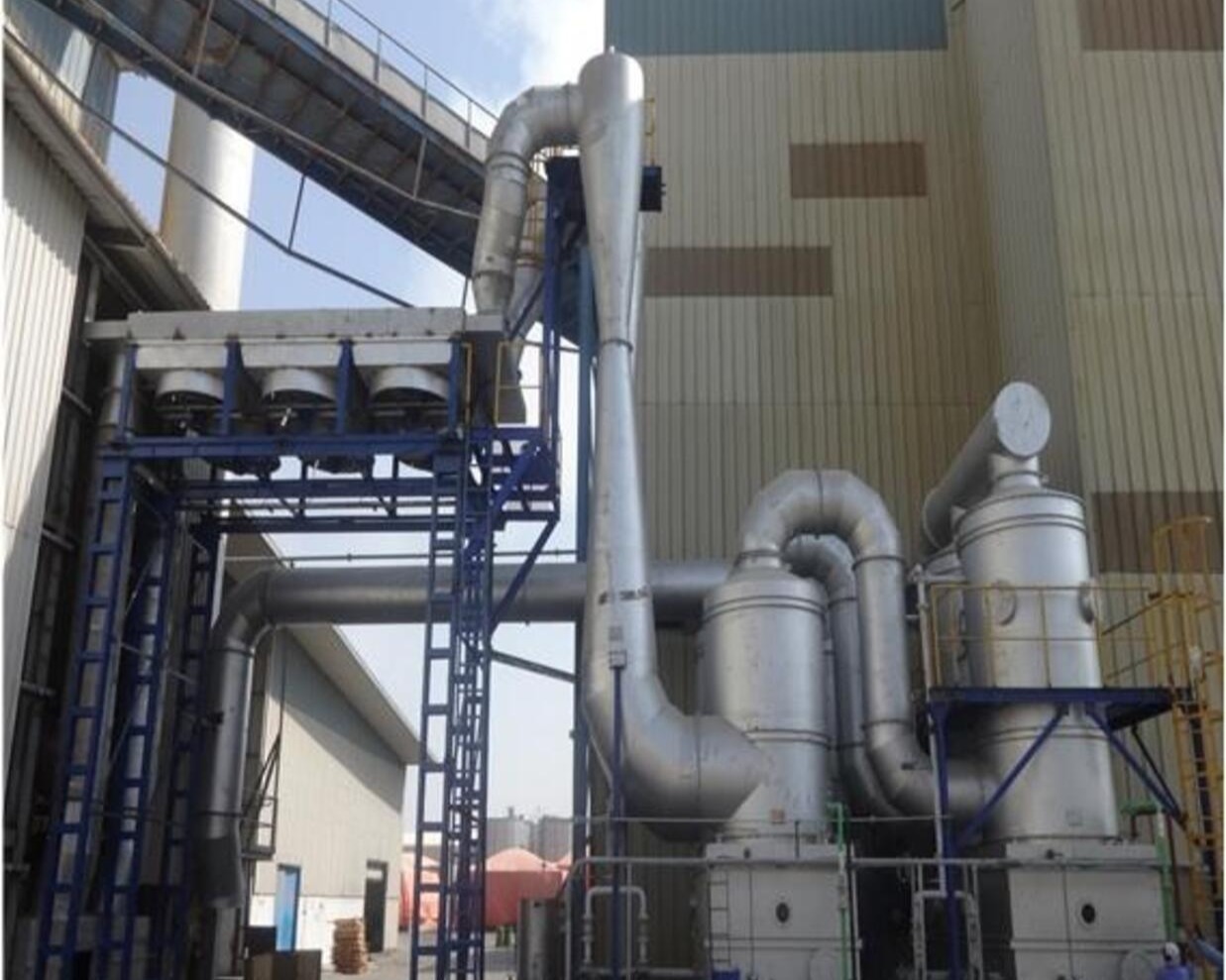
Fumes and gaseous contaminants require a different pollution-control approach from ordinary dry dust. When industries evaluate fume scrubber manufacturers in India, the first step should be identifying exactly what is present in the exhaust stream.
A wet scrubber uses liquid-to-gas contact to capture or absorb targeted contaminants. However, scrubber designs differ considerably, and equipment should not be selected purely according to airflow.
Chemical compatibility is one of the most important considerations. The pollutant, scrubbing liquid, equipment material and downstream liquid-handling arrangement need to function together without creating avoidable corrosion or maintenance issues.
Key questions to discuss with a manufacturer include:
What pollutants are present?
What are their concentrations?
Is the exhaust continuous or intermittent?
What is the gas temperature?
What airflow must be handled?
What removal requirement needs to be achieved?
Which scrubbing medium is appropriate?
How will wastewater or slurry be managed?
Pressure drop also matters because it influences fan requirements and energy consumption.
Another practical issue is mist carryover. Depending on the scrubber configuration, mist eliminators may be required to reduce liquid droplets leaving with the treated gas stream.
Industrial facilities in Maharashtra, Gujarat, Tamil Nadu, Karnataka and other manufacturing regions of India may encounter very different corrosive environments and process conditions. Construction materials therefore need to be chosen according to the actual application.
Envipro Engineering Pvt. Ltd. manufactures pollution-control equipment for industrial requirements across India. When considering wet scrubbing, businesses should assess the complete process, including collection, treatment, liquid circulation and discharge.
A technically suitable scrubber should provide the required pollutant contact while remaining practical to operate, inspect and maintain throughout its service life.